The Hindu festival of Navratri stands as a major religious event which represents divine authority and the process of spiritual regeneration, together with the practice of spiritual self-control. The festival lasts for nine holy days to commemorate the nine forms of Goddess Durga. The celebration centers on the practice of navaratri colors, which designates a different colour for each day because each colour has a profound spiritual meaning.
Chaitra Navratri stands as the primary celebration which occurs twice every year because it matches the Hindu New Year festival in various Indian regions. The devotees during this time create a sacred atmosphere through their strict compliance with the Navratri festival colours, their implementation of refined Navratri decoration themes and their home decoration of Navratri mandir spaces.
The blog provides complete information about the Navratri colours for 2026, which includes their meanings and modern Indian home decoration suggestions.
See also: Why Buy Home in Bangalore During Navratri?
Significance of Chaitra Navratri Colors
Chaitra Navratri occurs between March and April according to Hindu tradition because it marks the start of cosmic creation. The festival concludes with Ram Navami, which celebrates the birth of Lord Rama. The festival exists under various regional names, which include Gudi Padwa, Ugadi, and Navreh, yet all people celebrate it with the same purpose of invoking prosperity and balance with divine benefits.
People believe that following the Navaratri colors will help them achieve better spiritual alignment while bringing positive energy into properties and mandir spaces.
Navratri Festival Colours 2026: Day-Wise List and Meaning
The table below presents a complete summary of the Chaitra Navaratri colors, which show the Goddess worshipped each day and their corresponding spiritual meanings.
| Navratri Day | Colour | Goddess Form | Spiritual Meaning |
| Day 1 | Yellow | Goddess Shailputri | Positivity, optimism, auspicious beginnings |
| Day 2 | Green | Goddess Brahmacharini | Growth, harmony, perseverance |
| Day 3 | Grey | Goddess Chandraghanta | Balance, resilience, emotional strength |
| Day 4 | Orange | Goddess Kushmanda | Energy, creativity, enthusiasm |
| Day 5 | White | Goddess Skandamata | Purity, peace, maternal wisdom |
| Day 6 | Red | Goddess Katyayani | Power, courage, devotion |
| Day 7 | Dark Blue | Goddess Kalratri | Protection, stability, fearlessness |
| Day 8 | Pink | Goddess Mahagauri | Compassion, affection, harmony |
| Day 9 | Purple | Goddess Siddhidatri | Wisdom, prosperity, spiritual fulfilment |
See also: Home Colour Selection Tips: How Colours Impact Property Value?
Why Following Navaratri Colors Matters?
People practice this tradition through their daily clothing choices because it represents their cultural heritage. The practice is believed to do three things, which include:
- The devotee receives the power of the Goddess’s energy through the specific color which needs to be worn.
- The practice of prayer will become easier for people to focus on with this method.
- The practice creates a home environment which maintains spiritual peace throughout the space.
- The method creates a balance which enables people to show their religious devotion through artistic expression.
People across the world practice this method through their choice of clothing, decorative items, flowers, rangoli designs, and particularly for decorating mandirs during the Navratri festival.
Navratri Decoration Themes: Day-Wise Home and Mandir Ideas
Thoughtful décor helps transform everyday spaces into sacred sanctuaries. The following display themes for Navratri decoration work as refined practical options which match the daily colour requirements while preserving both elegance and simplicity.
Day-Wise Navratri Decoration Themes
| Day | Colour | Home Decoration Idea | Mandir Decoration Idea |
| Day 1 | Yellow | Marigold accents, yellow cushions | Yellow flowers, brass diyas |
| Day 2 | Green | Indoor plants, green fabric runners | Mango leaf toran, banana leaves |
| Day 3 | Grey | Grey lanterns, silver décor | Grey cloth base with warm lights |
| Day 4 | Orange | Orange candles, rangoli | Orange flowers, fabric drapes |
| Day 5 | White | White curtains, ceramic décor | Jasmine garlands, white diyas |
| Day 6 | Red | Red cushions, kumkum rangoli | Red flowers, glowing diyas |
| Day 7 | Dark Blue | Blue throws, golden accents | Blue backdrop with brass décor |
| Day 8 | Pink | Pink florals, fairy lights | Pink flower rangoli, lotus bowls |
| Day 9 | Purple | Purple runners, glass décor | Purple flowers with gold accents |
See also: Mandir Direction in Home: Vastu Tips for Peace & Positive Energy
Navratri Mandir Decoration: Essential Styling Guidelines
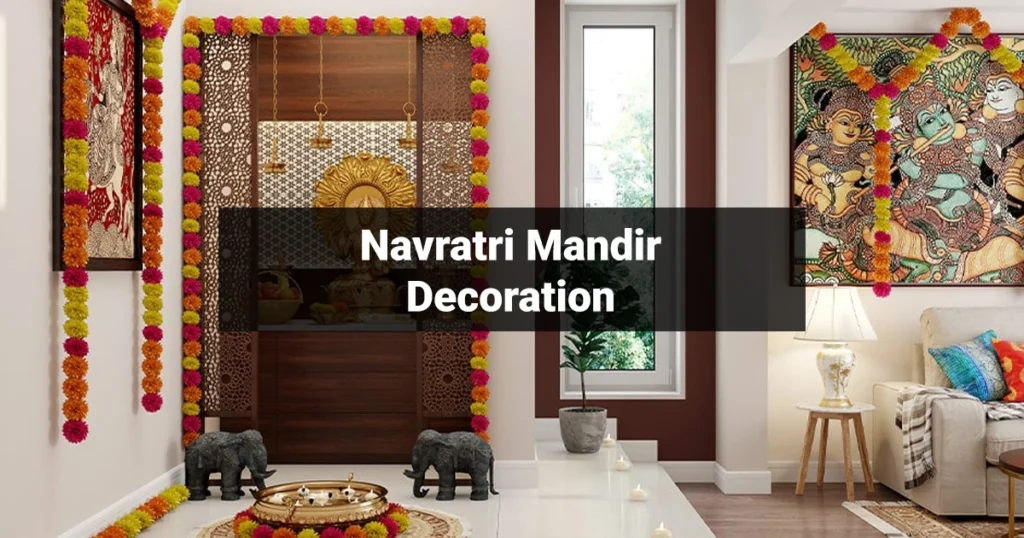
The process of planning decoration for the Navratri Mandir should prioritize three essential aspects, which are devotion and cleanliness, and equilibrium between those two elements, instead of adding excessive decorative elements.
Key Principles to Follow:
- The space will use natural materials, which include flowers, brass, wood and cotton fabrics.
- The mandir should remain free of unnecessary items to support spiritual activities.
- The space should use warm or soft white lights because they create a better atmosphere than bright artificial lights.
- The color of the Navratri day requires that all elements need to match the designated colors for that specific day.
The dedicated method of decorating the mandir space will create an environment which enables dedicated prayer activities to take place.
Innovative Yet Traditional Décor Ideas
Think about doing something to make your Navratri celebrations more special, in accordance with the tradition.
| Décor Element | Purpose | Best Placement |
| Fabric Backdrops | Adds colour without clutter | Behind mandir |
| Brass Urli with Flowers | Traditional elegance | Mandir entrance |
| Floating Diyas | Soft illumination | Near pooja area |
| Minimal Rangoli | Auspicious detailing | Main doorway |
| Colour-Themed Prasad Plates | Visual harmony | Mandir shelf |
See also: Tips for Griha Pravesh Pooja and House Warming Ceremony
Creating a Balanced Navratri Home Environment
The household atmosphere during Navratri needs to maintain its peaceful and organized state because decoration work is not yet finished. The soft devotional music, mild incense and the clean, organized space create a spiritual experience that matches the visual decorations.
See also: Bhumi Pujan Muhurat 2026: Best Dates for House Construction
Embracing Navaratri Colors with Grace and Purpose
The nine-day Navratri festival provides a spiritual path which people can travel through its nine special days. The festive experience becomes more meaningful through proper navaratri colors usage and elegant navratri decoration themes and peaceful navratri mandir decorative design.
The festival’s sacred rhythm emerges through each color which exists from Day 1’s Yellow optimism to Day 9’s Purple spiritual fulfilment. People who observe Navratri with purposeful dedication and discipline will experience complete spiritual renewal through the festival.
FAQ’s
Chaitra Navratri is celebrated to mark the Hindu New Year in many regions and to honour the creation of the universe along with the nine divine forms of Goddess Durga.
The nine Navaratri colors are Yellow, Green, Grey, Orange, White, Red, Dark Blue, Pink, and Purple, which people use to represent particular divine attributes.
The home mandir needs decoration through day-wise Navaratri colors application combined with fresh flowers and traditional diyas, soft lighting, and minimal uncluttered décor to keep its sacredness intact.
The nine-day Navratri decorations use daily colours for decoration through coordinated display of flowers and fabrics, rangoli and lighting elements.
The home decoration for Navratri needs to establish a pure space through matching colours and traditional design elements, soft lighting and sacred space design.