
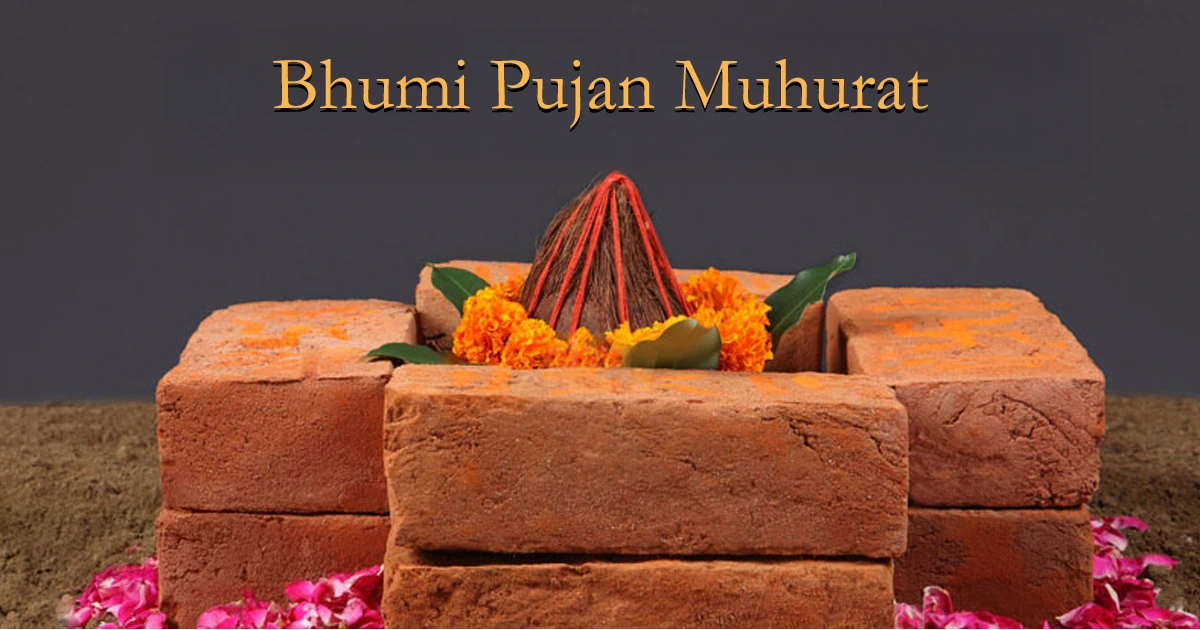
Bhumi Pujan Muhurat, which people also call Bhoomi Pooja and Bhumi Pujan, serves as a sacred Hindu ritual which builders perform before they begin work on new construction sites. The ceremony holds high spiritual and cultural value because it demonstrates respect for Mother Earth while seeking divine approval to begin construction work on the land.
Hindus believe that land exists as a living entity which cosmic energies and deities control, thus constructing on land without proper rituals leads to potential construction delays and harmful energy problems.
The selection of a suitable bhumi pujan is considered crucial. A muhurat designates an auspicious time which Vedic astrology determines by observing human activities during periods of optimal planetary configurations. The blog provides all necessary information about Bhumi Pujan Muhurat 2026 by explaining its significance, showing the auspicious months, ritual procedures and mantras, required items, Vastu directions and frequently asked questions.
See also: Mandir Direction in Home: Vastu Tips for Peace & Positive Energy
What Is Bhumi Pujan?
The practice of Bhumi Pujan shows dedication to land worship through its Vedic ritual, which prohibits any digging work, foundation construction or building activities. The ceremony honours Bhumi Devi, who represents Earth by worshiping her and worshiping the natural forces and divine powers which people believe exist below the Earth’s surface.
People traditionally perform Bhumi Pujan to celebrate:
- New house construction
- Apartment or villa projects
- Commercial building projects
- Temple and religious building construction
The building ritual requires forgiveness for land disturbance, while it asks for protective blessings which establish enduring prosperity and stability for the construction project.
Importance of Bhumi Pujan in House Construction
The Hindu belief system considers building work to be more than just construction work because it serves as a method for spiritual development. Bhumi Pujan establishes a balance between the land and its residents and the natural forces that exist in the universe according to Hindu beliefs.
The key reasons for performing bhumi pujan include:
- The procedure begins with land cleansing to eliminate all land-based negative energy.
- All construction activities must be completed before any potential legal problems, financial challenges, or project delays begin.
- The process ensures that the building will maintain its structural integrity and long-lasting strength.
- The ritual creates a space that brings prosperity to the area, peace to the residents and happiness to all who live there.
- The design needs to follow both Vastu requirements and the rules of astrology.
The earth must first undergo excavation work before building construction can begin, which makes Bhumi Pujan a vital requirement for all foundation work.
See also: Home Colour Selection Tips: How Colours Impact Property Value?
Understanding Bhumi Pujan Muhurat
The determination of a bhumi pujan muhurat requires the assessment of multiple astrological elements, which include:
- Tithi (lunar day)
- Nakshatra (constellation)
- Vaar (day of the week)
- The movements of celestial bodies
The determination of inauspicious times, which includes Rahu Kaal, Yamagandam and Gulikai Kaal, and Bhadra, must be avoided during this period.
The traditional practice of Bhumi Pujan prohibits its execution during specific times, which include Chaturmas and Pitru Paksha, eclipses and Amavasya days except when an astrologer provides alternate guidance.
Bhumi Pujan Muhurat 2026 – Exact Dates Tables
The table below displays the auspicious dates for Bhumi Pujan 2026, which are organized by their respective months for simple accessibility. Local Panchang will determine the precise timing for muhurta, which will differ from the actual time.
Bhumi Pujan Muhurat — February 2026
| Date | Day | Remarks |
| 6 Feb 2026 | Friday | Favourable nakshatra window |
| 11 Feb 2026 | Wednesday | Auspicious planetary alignment |
| 19 Feb 2026 | Thursday | Preferred muhurat |
| 21 Feb 2026 | Saturday | Extended auspicious period |
| 25 Feb 2026 | Wednesday | Late afternoon favourable |
Bhumi Pujan Muhurat — April 2026
| Date | Day | Remarks |
| 20 Apr 2026 | Monday | Morning to early hours |
| 26 Apr 2026 | Sunday | All-day auspicious period |
Bhumi Pujan Muhurat — August 2026
| Date | Day | Remarks |
| 19 Aug 2026 | Wednesday | Early morning auspicious |
| 20 Aug 2026 | Thursday | Full-day favourable |
| 28 Aug 2026 | Friday | Afternoon to night favourable |
| 29 Aug 2026 | Saturday | Morning favourable |
Bhumi Pujan Muhurat — September 2026
| Date | Day | Remarks |
| 12 Sep 2026 | Saturday | From afternoon to the next day |
| 14 Sep 2026 | Monday | Morning auspicious |
Bhumi Pujan Muhurat — October 2026
| Date | Day | Remarks |
| 30 Oct 2026 | Friday | Early to mid-morning auspicious |
Bhumi Pujan Muhurat — November 2026
| Date | Day | Remarks |
| 1 Nov 2026 | Sunday | Early morning window |
| 5 Nov 2026 | Thursday | Afternoon auspicious |
| 14 Nov 2026 | Saturday | Evening to early next day |
| 21 Nov 2026 | Saturday | Morning to afternoon |
| 25 Nov 2026 | Wednesday | Extended favourable |
| 26 Nov 2026 | Thursday | All-day auspicious period |
Bhumi Pujan Muhurat — December 2026
| Date | Day | Remarks |
| 2 Dec 2026 | Wednesday | Morning favourable |
| 3 Dec 2026 | Thursday | Full-day auspicious |
| 4 Dec 2026 | Friday | Morning to evening favourable |
| 5 Dec 2026 | Saturday | All-day auspicious |
| 12 Dec 2026 | Saturday | Morning to early afternoon |
See also: Why Wooden Wardrobe Designs Will Never Go Out of Style?
Auspicious Tithis for Bhumi Pujan
Hindu scriptures require people to choose the correct tithi because it serves as their primary method to calculate Bhumi Pujan muhurat after they already chosen the correct date and nakshatra. The particular tithis which matter most for land ceremonies and building construction work receive special recognition as important ceremonial days.
The following tithis are regarded as shubh (auspicious) for Bhumi Pujan:
- Dwitiya (2nd lunar day) – Symbolizes growth and balance
- Tritiya (3rd lunar day) – Associated with strength and stability
- Panchami (5th lunar day) – Favourable for foundation-related work
- Saptami (7th lunar day) – Supports progress and momentum
- Dashami (10th lunar day) – Represents success and completion
- Ekadashi (11th lunar day) – Spiritually pure and sattvic
- Trayodashi (13th lunar day) – Ideal for long-term projects
People practice Bhumi Pujan during Amavasya (new moon) and Purnima (full moon), and Chaturdashi and Ashtami tithis, only after qualified astrologers use the individual horoscope and Panchang to determine their suitability for the ritual.
Auspicious Weekdays for Bhoomi Pooja
The success of Bhumi Pujan depends on which weekdays (vaars) are selected for the ceremony. The activities that people start on each day depend on the planetary deity that governs that day.
The following weekdays are considered favourable:
- Monday (Somvar) – Associated with peace, emotional stability, and longevity
- Wednesday – The intelligence and communication abilities of people are improved through Wednesday (Budhvar) activities, which enable them to complete their tasks effortlessly.
- Thursday – The highly auspicious day of Thursday (Guruvar) exists under Jupiter’s rule, who represents wisdom and prosperity.
- Friday – The day of Friday (Shukravar) brings benefits for people who seek comfort and harmony and material success.
Astrologers who provide their recommendations should be consulted before performing Bhumi Pujan on Sunday and Saturday, which the Sun and Saturn respectively govern, because these days bring barriers of delay and power disputes.
Inauspicious Yogas and Time Periods to Avoid
Bhumipujan requires performance on auspicious days, but certain yogas and time segments should remain unperformed because these times bring about negative results, which cancel out positive outcomes.
The following time periods should not be used:
- Rahu Kaal – Considered unfavourable for starting new ventures
- Yamagandam – Associated with obstacles and disruptions
- Gulikai Kaal – Can lead to delays and inefficiencies
- Bhadra (Vishti Karana) – Strongly avoided for construction and foundation work
- Panchak – Five days are considered inauspicious in many traditions
- Solar and Lunar Eclipses – The entire eclipse duration is prohibited
- Pitru Paksha – Period dedicated to ancestral rituals, not new beginnings
A priest uses his skills to find an appropriate muhurat which falls outside the designated periods because the date remains auspicious.
See also: Vastu for Apartments: Which Floor Is Best for Positive Energy
Bhumi Pujan for Apartments vs Independent Houses
The requirements and format of Bhumi Pujan vary depending on the type of property.
Independent Houses and Plots
Bhumi Pujan serves as a prerequisite for all independent houses, villas and individual plots before construction work begins. The ritual is performed directly on the construction site and includes digging the earth at the north-east corner.
Apartments and Group Housing Projects
In apartment projects, Bhumi Pujan is usually conducted once for the entire development by the builder or developer before construction begins. Individual flat owners are not required to perform a separate Bhumi Pujan. Buyers who wish to do so can schedule their personal Ganesh Puja or Griha Pravesh ceremony before moving into their new flat.
Most homeowners wrongly assume that Bhumi Pujan functions as a requirement for them to own an apartment.
Difference Between Bhumi Pujan and Griha Pravesh
People commonly mix up Bhumi Pujan with Griha Pravesh because these two ceremonies have different functions.
- Indian people perform Bhumi Pujan to dedicate land as holy ground before starting their construction projects.
- People conduct Griha Pravesh after they finish building work to mark the beginning of their stay in the house.
The two rituals hold equal importance because they complement each other by showing the sacred starting points and sacred finishing points of home construction work.
Regional Panchang Considerations
The Bhumi Pujan dates for 2026 will experience minor differences because of regional Panchang systems, which include the following systems: North Indian Panchang, South Indian Panchang, Gujarati Panchang and Maharashtrian Panchang.
The above dates have general acceptance, yet specific muhurat times need local verification because astronomical events such as sunrise, sunset, nakshatra transitions and planetary positions differ across various regions.
Bhoomi Pooja Mantras: Spiritual Core of the Ceremony
The earth receives sacred protection through mantras, which create a bridge to divine power. The main mantra used in Bhumi Pujan ceremonies is:
“Om Vasundharaya Vidmahe
Bhutadhatraya Dhimahi
Tanno Bhumih Prachodayat.”
The mantra expresses respect for Mother Earth because she provides life sustenance, and the mantra shows the seeker who wants to be strong and stable with prosperous results.
Additional mantras are dedicated to:
- Lord Ganesha, who removes obstacles
- Navagrahas who create planetary harmony
- Lord Vishwakarma, who serves as the divine architect
An experienced priest (pandit) performs mantra recitation because he controls the ritual through his accurate pronunciation and timing.
Procedure for Bhoomi Pooja
The Bhoomi Pooja ceremony triggers its usual ritual routine that is used to purify the land, and the priests invoke the divine influences before the commencement of construction activities.
- Site Preparation and Cleaning -Cleaning of the plot area is physically a depiction of physical and spiritual purification.
- Kalash Sthapana– The holy pot is set by the installation of the pot with the intention of demonstrating the presence of a divine, and also to portray creation and good fortune.
- Ganesh Puja – Lord Ganesha is given precedence since he eliminates any hurdles, hence ensuring that a construction project is successful.
- Navagraha Puja– Nine planetary gods are invoked to establish balance between the planetary powers that affect the project.
- Bhumi Devi Puja– The people love this Mother Earth as the mother nature, and they seek forgiveness concerning activities that disturb the land, also seek protection.
- Placement of Foundation Stone -A foundation stone is laid to represent the commencement of the construction work.
- Havan -The fire ceremony cleanses the area as it works as an instrument to attract positive power.
The ceremony is closed with the gift of prasad that is the representation of collective division of holy blessings.
Each step is the starting point of the construction process, and it takes mantras and offerings to establish the auspicious and harmonious environment.
See also: 10 Best Wooden Flower Pot Stand Design Ideas Trending in 2026
Items Required for Bhoomi Pooja

The essential items include:
- Kalash (sacred pot)
- Coconut with husk
- Rice grains
- Turmeric and kumkum
- Sandalwood paste
- Flowers and garlands
- Incense sticks and a diya (oil lamp)
- Navagraha puja materials
- Havan samagri (fire offerings)
- Fruits and sweets (prasad)
Direction for Bhumi Pooja
Vastu Shastra states that Bhumi Pujan should be performed facing north-east because this direction brings positive energy and prosperity. The east direction serves as an alternative when north-east access is not possible.
Winding Up
The ritual of Bhumi Pujan is employed to serve as a spiritual foundation that creates holiness on the land prior to the initiation of construction work. The right Bhumi Pujan Muhurat 2026 choice will ensure project execution with the help of auspicious energy, reduce any barriers and adhere to the traditional assumptions regarding the harmony of the cosmos. The above date tables can be used to make a practical muhurat calendar.
The right timings, depending on the personal need, should be taken with a local priest or an astrologer who is aware of the city-specific timing.
FAQ’s
The Bhumi Pujan muhurats to be observed in 2026 will be observed in the months of February, April August, September, October, November and December, and the exact timings will be decided based on local Panchang and recommendations of priests.
The best course of Bhumi Pooja ought to run to the north-east direction, whereas the second best course would be the east direction.
The required products of the ceremony are kalash, coconuts, rice, turmeric, sandalwood paste, flowers, incense sticks, diya, navagraha puja products, havan samagri, fruits, and sweets.
It starts with the purification of the site, which is carried on with Ganesh Puja, Navagraha Puja and Bhumi Devi worship, laying of the foundation stone, havan and distribution of prasad.
The Bhumi Pujan is a very essential ritual since it invokes divine blessings, but it also eliminates negative energies and secures the construction process with the help of cosmic laws and offers the construction activities a peaceful, successful, and continuous state.